Skip to content
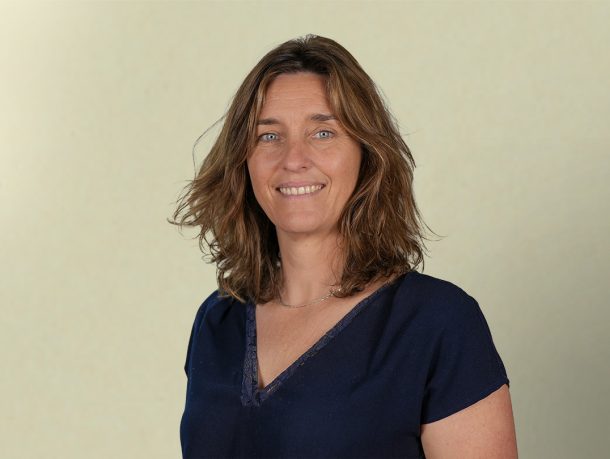
DEWASME-LAVEAU Coralie

DEWASME-LAVEAU Coralie

Ingénieur d'études

Vine Ecophysiology and Functional Genomics

Subjects

Physiologie du jeune plant de vigne - Virus de la vigne

Keywords

Viticulture, matériel végétal, maladies de dépérissement, virus

Biography

Après une maitrise en Physiologie Végétale Appliquée à l’université de Montpellier et un Master en Protection et Valorisation du Végétal obtenu en 2000, j’ai débuté ma carrière dans la production et le conseil viticole. Par la suite, j’ai exercé pendant 6 ans dans le milieu de la recherche : 3 ans sur les maladies du bois de la vigne à l’INRA de Bordeaux dans l’UMR Santé et Agroécologie du Vignoble puis pour un consortium de château Bordelais afin de poursuivre les travaux de recherche sur le court-noué de la vigne, initiés dans le cadre d’une thèse pour aboutir à une solution appliquée pour les viticulteurs. En 2011, forte de ces diverses expériences en production, en conseil et en recherche, j’ai créé et pris la direction de la quatrième cellule de transfert de l’ISVV. Cette unité travaillant sur la protection et les modes de productions en viticulture, l’agroécologie et la physiologie de la vigne est adossée à Bordeaux Sciences Agro. A présent, je suis ingénieur d’études à Bordeaux Sciences Agro où j’enseigne en viticulture dans le département Viticulture-Œnologie et je mène des recherches sur la physiologie du jeune plant de vigne au sein de l’Unité Mixte de Recherche UMR EGFV1287 à l’ISVV.

Research unit and labs

UMR EGFV

Institut des sciences de la Vigne et du Vin (ISVV)

Ecole doctorale de rattachement : Sciences de la Vie  et de la Santé

MSc – Master of Science® in Vineyard & Winery Management

Master of Science

The course is designed to provide knowledge and training needed to manage a wine company or a wine estate in an international context.

MSc – Master of Science® in Vineyard & Winery Management

About the degree

This degree is designed to provide the knowledge and training needed to manage a wine company, wine estate or winery in an international context. Whether your previous experiences have focused on the commercial, managerial or viticultural aspects of the industry, the program seeks to complement your knowledge base with a solid, practice-oriented curriculum. 

Career Opportunities

Courses are designed to put knowledge into practice and lay the foundations for a successful career in the vine and wine industry, with many job prospects including: 

  • Wine estate manager
  • Cellar manager
  • Vineyard manager
  • Consultant in viticulture and enology
  • Consultant in wine trading and/or distribution
  • Research and developement in the wine industry
  • Educator
  • Etc.

Learning Outcomes

Vineyard Management and Wine Production

  • Analyze the interactions between soil/climate/vine.
  • Manage the vineyard from plantation to harvest.
  • Understand the science-based fundamentals of terroir, choice of plant material and canopy management through practical experience.
  • Acquire and develop knowledge of enology and winery technology.
  • Study the chemical composition of wine and understand its origins and development through winemaking processes.
  • Perform sensory analysis of wine to evaluate its flavor, aroma, texture, and overall quality.
  • Conduct winery evaluations focused on aligning wine production with the commercial objectives.

International Business and Performance Management

  • Design and implement a business plan (i.e. operating statement, choice of actions, etc.).
  • Structure the legal and/or financial framework of the project.
  • Strategically set priorities and monitor accomplishment of business objectives.
  • Link sustainability and corporate social responsibility (CSR) to stakeholder claims.

Commercialization

  • Price the product according to economic and technical criteria.
  • Conduct commercial analyses and carry out a cost accounting.
  • Understand product innovation, brand management, and distribution channels.
  • Forecast sales and revenues.

Study program

This two-year Master’s program (taught entirely in English) combines technical skills (viticulture and oenology) and entrepreneurial skills (business management).

Semester 1

  • Immersion Week
  • Bibliographic Research, Synthesis, and Presentation (TU1)
  • Vine and Wine Data Analysis and Visualization (TU2)
  • Introduction to the Wine Industry (TU3)
  • Wines & Spirits: International Markets & Clusters (TU4)
  • Basics in Wine Estate Management (TU5)
  • Fundamentals of Viticulture and Enology (TU6)
  • Wine Policies and Fundamentals of Microeconomics (TU7)
  • Study Trip (Mediterranean/Atlantic Terroir)

Semester 2

  • Open Unit 1 – Sensory Training
  • Seasonal Vineyard Practices and Management (TU8)
  • Enology and Winery Technology (TU9)
  • Marketing, Supply Chain, and Distribution (TU10)
  • Cost and Profitability (TU11)
  • Technical Audit – Vineyard and Winery (TU12)
  • Financial Management (TU13)
  • First-Year Practical Internship – Part 1 (TU14)

Semester 3

  • First-Year Practical Internship – Part 2 (TU15)
  • Open Unit 2 – Winery Design and Equipment
  • World Viticulture (TU16)
  • Specific Vinification and Aging (TU17)
  • International Business and Development Strategies (TU18)
  • Business Plan for Wine Estate (TU19)
  • Leadership and Project Management (TU20)
  • Global audit (TU21)

Semester 4

  • Final Internship – Part 2 (TU22)

Internships

The program is built around two internship experiences where students will have real professional experiences in vineyard and winery operations and the associated business.

The internships take place during the summers after the first and second years of study.

Application requirement

Candidates are required to have an undergraduate degree of at least 3 years (i.e. bachelor’s degree, or the equivalent) from an accredited college or university, in one of the closely related fields:

  • Agronomy/Agricultural Sciences
  • Food/Plant Sciences & Technologies
  • Business, Management or Economics

The tuition fees for the Master’s degree are 11,000 € per year

Dates

October 1stOnline application opens (first call)
Mars 15thDeadline for first call applicants
AprilThe decisions of the Jury of eligibility for first call applicants
By the end of the month, preselected applicants will be interviewed via Zoom and students will be advised of acceptance
April 1stSecond call for application is open
July 1stDeadline for the second call applications
June-JulySecond call preselected applicants will be interviewed via Zoom and students will be advised of acceptance

Contacts

General Enquiries

  • master.science@agro-bordeaux.fr

Bachelor’s degree in Viticulture and Enology

Bachelor

From technical knowledge to professional practices, students will get a broader perspective in viticulture and enology, with particular focus on sensory analysis.

Bachelor’s degree in Viticulture and Enology

Description

From technical knowledge to professional practices, students will get a broad perspective in viticulture and enology, as well as a particular focus on sensory analysis.

Our Bachelor’s degree in Viticulture and Enology will allow graduates to:

  • Become a skilled professional in the global wine industry
  • Participate in projects related to international viticulture and winemaking techniques
  • Provide technical advice and support to other wine industry professionals
  • Acquire specific knowledge in sensory analysis

Teaching program

VITICULTURE

  • Grapevine physiology
  • Ecophysiology
  • Vineyard management

SENSORY ANALYSIS

  • Tasting rules
  • Physiology of taste
  • Varietal, fermentative and aging aromas
  • Off odours

ENOLOGY

  • Transforming grape juice into wine (fermentation science)
  • Aging
  • Bottling

Campuses

6 MONTHS / Bordeaux Sciences Agro & EPL Bordeaux Gironde
2 WEEKS / Institut agro Dijon (Burgundy)
2 WEEKS / Institut agro Montpellier
2 DAYS / Ensat Toulouse

Career opportunities

  • Cellar manager
  • Vineyard manager
  • Technical consultancy, experimentation, control and auditing
  • Managing projects for professional or public institutions and organizations

Admission

Completed 2nd year of undergraduate studies (equivalent to French “BAC + 2” Level or U.S. associate degree of 2 years) in biology, chemistry, biochemistry, microbiology, fermentation and/or food sciences, agriculture, mathematics, and physical sciences.
English language proficiency at CEFR level B2.

Admission

The tuition fees are 9,600 € per year, to be paid in 3 installments.
The tuition fees include inscription and general administrative costs, classes and travel costs for study visits only. Fees do not include accommodation and living expenses.
Living costs in Bordeaux: a monthly budget of approximately 600 € is necessary to live in Bordeaux.

Dates

January 1stOnline application opens (first call)
Mars 15thDeadline for first call applicants
AprilThe decisions of the Jury of eligibility for first call applicants
By the end of the month preselected applicants will be interviewed via Skype and students will be advised of acceptance
April 1stSecond call for registration is open
May 31stDeadline for payment of inscription fees for first call applican
July 1stDeadline for the second call applications (The recruitment period for next year will open in January)
June-JulySecond call preselected applicants will be interviewed via Skype and students will be advised of acceptance
July 30thDeadline payment of registration fees for the second call applicants

Contacts

General Enquiries

  • info.bachelor@agro-bordeaux.fr
GREVEN Marc

GREVEN Marc

Ph.D., Associate Professor of Viticulture

Enology

Subjects

Viticulture, Vine water use, Sustainability, Carbohydrate partitioning

Keywords

Canopy management, Irrigation, Sustainability, database, Crop predictions

Biography

Since receiving a PhD degree in 2000 from Lincoln University in Canterbury, New Zealand I have been working as research Scientist in Viticulture and Oenology for Plant and Food Research while teaching viticulture and statistics as Adjunct Lecturer for Lincoln University and The Nelson Marlborough institute of Technology (NMIT) in Blenheim, New Zealand. My main research subjects are Viticulture, Vine water use, Sustainability, Carbohydrate partitioning and Vineyard management analysis, all related to wine quality. In September 2018 I started as associate professor at Bordeaux Sciences Agro, a French ‘Grand École’ for agricultural engineering, while on a one year sabbatical from Plant and Food Research. As the coordinator and lecturer for the newly started Bachelor program at BSA I am also involved in teaching in the MBS program at BSA. My research interest is mainly in vineyard management and its influences on wine quality.

Research unit and labs

Écophysiologie et Génomique Fonctionnelle de la Vigne INRA, Institut des Sciences de la Vigne et du Vin 210, chemin de Leysotte, 33883 Villenave d’Ornon, France

Winegrowing practices and soil biodiversity

Research

Pierre Blondel’s PhD research, conducted at Bordeaux Sciences Agro and INRAE, highlights how organic matter and pesticide use shape soil biodiversity in vineyards — particularly springtail communities and microbial activity — offering new insights into the agroecological management of vineyard soils.

Pierre Blondel defended his thesis on 19 December 2024 at the Institut des Sciences de la Vigne et du Vin. He worked in the INRAE-BxScAgro Vineyard Health and Agroecology research unit under the supervision of Brice Giffard, senior lecturer at BxScAgro.


His work has focused on assessing the effect of wine-growing practices such as the use of pesticides, copper contamination of soils and tillage of vine rows and inter-rows on the diversity of the mesofauna (microarthropods between 0.1 and 2 mm) and the activity of the microbial compartment in production plots.

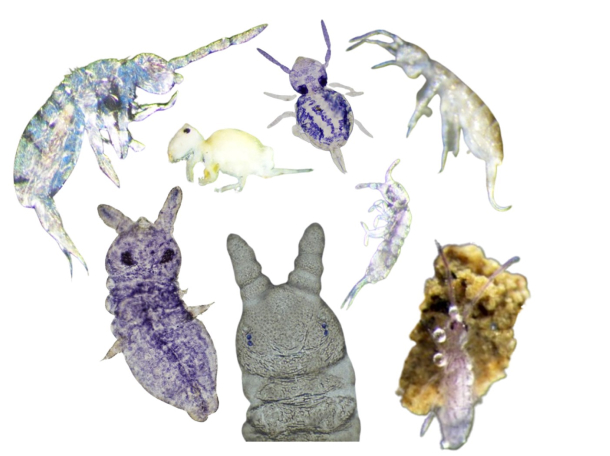
For the mesofauna in particular, he studied the effect of practices and the landscape environment on the diversity and abundance of springtails by sorting and identifying hundreds of individuals (illustration). These microarthropods, closely related to insects, can number several hundred individuals per m², with species adapted to life on the surface or deeper in the soil. Their role in the soil is more or less known, but they are detritivores and stimulate the activity of microorganisms by consuming them. In work carried out on the Bacchus site-workshop coordinated by Adrien Rusch (UMR Santé et Agroécologie du Vignoble), Pierre has shown that the most important factors explaining the diversity and abundance of these springtails are the level of organic matter, a fundamental resource for soil life, and the intensity of pesticide use. The diversity and abundance of these microarthropods increases when the soil in the plots is richer in organic matter and when the intensity of pesticide use in the plots is lower. In our data, we found no negative effect of soil copper contamination on Collembola diversity and a tendency towards a positive effect of tillage (fairly superficial in the plots studied): further research is needed to better understand the effects of soil compaction in vineyard inter-rows or of the different types of tools used on these communities.

Pierre measured the enzymatic activity of the microorganisms and once again showed that the level of organic matter was a major factor in explaining the activity response of microbial communities, more so than practices (organic or conventional farming, tillage or grassing).

Pierre’s work has been published twice, in the journal Applied Soil Ecology for the article on springtails: ‘Pesticide use and soil disturbance shape springtail communities in vineyards’ and in Pedobiologia for the article on the activity of microorganisms: ‘Organic matter content rather than farming practices modulates microbial activities in vineyard soils’.

To find out more:

  • Blondel P, Joubard B, Rusch A, Giffard B (2024) Pesticide use and soil disturbance shape springtail communities in vineyards. Applied Soil Ecology, 105694. https://doi.org/10.1016/j.apsoil.2024.105694
  • Blondel P, Fanin N, Joubard B, Milin S, Rusch A, Giffard B (2025) Organic matter content rather than practices modulates microbial activities in vineyard soils. Pedobiologia, 108 – 151017. https://doi.org/10.1016/j.pedobi.2024.151017

More information on the Bacchus network website : https://www.siteatelier-bacchus.com/

Financing :

This work was funded by the Conseil Interprofessionnel des Vins de Bordeaux between 2021 and 2024 (ENDLESS project) and Pierre Blondel’s PhD grant was co-financed by Bordeaux Sciences Agro. This project also involved researchers and technicians from another Bordeaux research unit, ISPA (Nicolas Fanin, Sylvie Milin). Benjamin Joubard (BxScAgro) supervised the field and laboratory measurements and supported Pierre Blondel’s work throughout the thesis.

Contacts :

 Unité SAVE :

https://www.linkedin.com/in/inrae-save/

https://sante-agroecologie-vignoble.bordeaux-aquitaine.hub.inrae.fr

Specialization – Viti Manager

Agricultural engineering

Managing vineyards and wineries within a global economy

Specialization – Viti Manager

Description

The VitiManager specialization provides advanced training in the specific areas of vineyard and winery management, wine business organizational structure and management.
It provides in-depth knowledge and a range of experiences in the wine industry through graduate courses, seminars, study visits, workshops and internships.
The focus of the track is 60% on wine estate business administration, wine economics and marketing and 40% on technical viticulture and enology.

Contacts

Guilherme MARTINS-MARQUES

  • Educational Contact
  • guilherme.martins@bordeaux-agro.fr
LYTRA Georgia

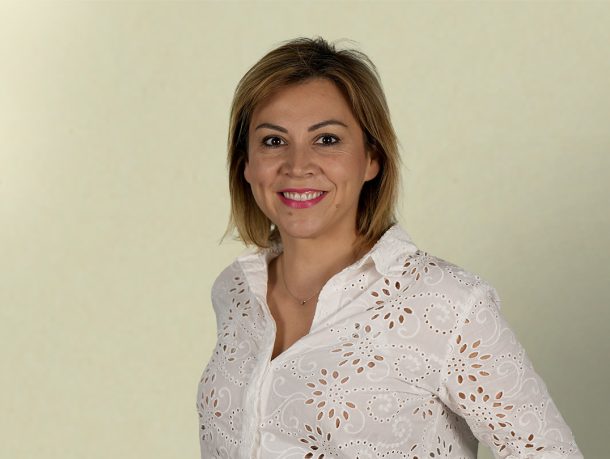
LYTRA Georgia

Ph.D., Associate Professor of Enology

Subjects

The research projects I supervise are carried out within the Enology Research Unit, under the "Determinants of Sensory Properties" axis at ISVV, and primarily focus on the chemical and sensory mechanisms related to the aromatic expression of wines, with particular emphasis on the fruity aroma of red wines.

Keywords

Red wine, perceptual interactions, sensory analysis, fruity aroma, wine composition.

Biography

Trained as an oenologist at the University of West Attica in Athens, I completed my studies with a PhD in oenology at the Institute of Vine and Wine Sciences – ISVV (University of Bordeaux, Oenology Research Unit). My thesis focused on studying the typical fruity aromatic expression of Bordeaux red wines through perceptual interactions. Awarded the prize for the best thesis defended in 2012 on aromas (GIRACT), my results allowed me to continue research on this topic through two postdoctoral positions. I joined Bordeaux Sciences Agro in the fall of 2017 as an Associate Professor in Oenology, and I am now the director of an international program, the Master of Science in Vineyard and Winery Management at Bordeaux Sciences Agro. My research is conducted within the Oenology Research Unit, under the “Determinants of Sensory Properties” axis at ISVV. My research aims to study the aromatic expression of red wines from both chemical and sensory perspectives.

Specialization – Viticulture – Enology

Agricultural engineering

Receive a high-quality education, enter a rapidly growing sector, succeed professionally

Specialization – Viticulture – Enology

Description

The evolution of the international wine industry has led us to offer teaching based on versatility, scientific expertise, adaptability and project management.
The viticulture-enology specialisation aims to train advisors and/or production managers for various companies in the industry.
It meets the growing demand for highly qualified technical executives in wine growing and winemaking.

Contacts

BARBE Jean-Christophe

  • Professor of viticulture
  • +33 5 57 35 38 73

Adapting wine production to climate change

International programsResearch

Vine-growing is highly dependent on the climate: climate change is having an impact on grape yields and composition, as well as on wine quality, with consequences for the geography of wine production around the world.

Authors
Cornelis van Leeuwen, Giovanni Sgubin, Benjamin Bois, Nathalie Ollat, Didier Swingedouw, Sébastien Zito and Gregory A. Gambetta

Contact
Cornelis (Kees) van Leeuwen

Context

Vine-growing is highly dependent on the climate: climate change is having an impact on grape yields and composition, as well as on wine quality, with consequences for the geography of wine production around the world.

To produce quality wine, the grapes must reach maturity, otherwise the wine produced is low in alcohol, acidic and vegetal. But at the same time, the grapes must not reach full ripeness in very hot weather, as in this case the grapes risk being too sweet (and the wines too alcoholic), not acidic enough (the wines may lack freshness) and with an aromatic palette dominated by cooked fruit.

Article summary

A literature review to be published in March in the journal Nature Reviews Earth and Environment examines the consequences of changes in temperature, rainfall, humidity, radiation and CO2 levels on vine growing. Adaptation strategies are also explored.

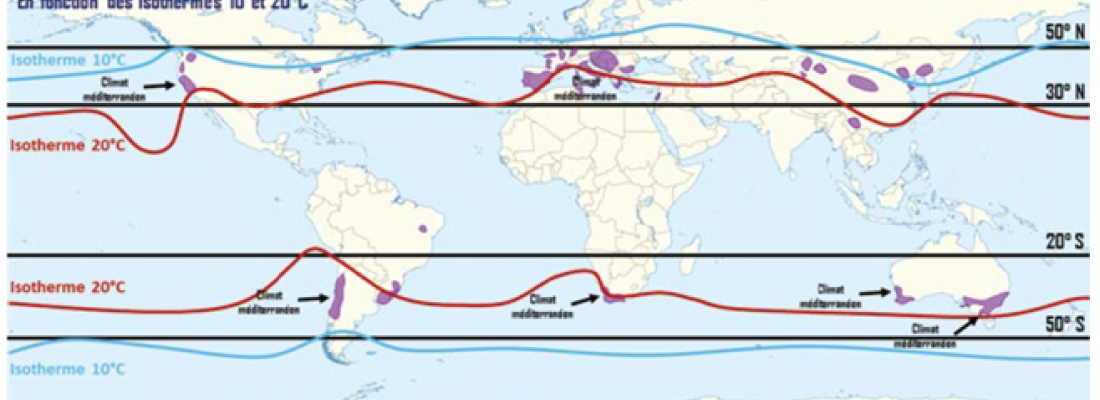
Today’s wine-growing regions are mainly located at mid-latitudes (California, USA; southern France; northern Spain and Italy; Barossa, Australia; Stellenbosch, South Africa; Mendoza, Argentina; among others) where the climate is sufficiently warm, but not excessively so, to allow the grapes to ripen, and relatively dry to limit the pressure of disease. Climate change will alter the geography of wine-growing regions. The survival of around 90% of traditional coastal and lowland wine-growing regions in Spain, Italy, Greece and southern California is threatened by the end of the century due to the risk of excessive drought and more frequent heat waves. Higher temperatures could improve the suitability of other regions (Washington State, Oregon, Tasmania, northern France) and lead to the emergence of new wine-growing regions, such as the south of the UK. The extent of these changes in aptitude depends very much on the intensity of the increase in temperature. Current producers can adapt to a certain level of warming by modifying plant material (varieties and rootstocks), management systems and cultivation practices. However, these adaptations may not be enough to maintain economically viable wine production in all regions. It is now vital to conduct research to assess the economic impact of large-scale climate change adaptation strategies.

Publisher’s summary

Wine grapes are highly sensitive to climate change, particularly extreme temperatures and droughts. This study analyses changes in the geography of existing and emerging wine-growing regions around the world, and proposes measures for adapting to rising temperatures and drought, as well as to the pressure exerted by pests and diseases.

References

Article accepted for publication in Nature Reviews Earth and Environment

Full press release on the INRAE Press Room

IVES ‘Science meeting‘ in California: a feedback

Research

With its hundred or so academic, institutional and private sector partners, IVES is also a networking tool. Once a year, a meeting is organised over several days, at which the general meeting of the association, the editorial boards of the three journals and a day of conferences where researchers who have published in OENO One are invited to present their work. This Science Meeting 2024 was organised in California.

Contributions :

Contact : Kees van Leeuwen

Context

Scientific publishing is dominated by large publishers, which operate either on a subscription model (Nature-Springer, Elsevier, Wiley), or on a model where the publisher pays very high publication fees (mdpi, Frontiers, PlosOne, BMC), or on a hybrid model. In 2016, Kees Van Leeuwen set up the vine and wine science journal OENO One, based on a radically different model. The federation of universities, research centres, institutions and private partners makes it possible to publish in “Diamond Open Access”, which means that articles are published online, made freely accessible to readers and without “article processing charges” for the author (free of charge for the author). To manage the journal, the “International Viticulture and Enology Society” (IVES) was created in 2017. All academic members, institutional partners and private partners participate with an identical contribution, i.e. €5,000/year. After 7 years of existence, OENO One is the scientific journal on vine and wine sciences with the highest number of articles published per year (around a hundred) and the highest impact factor in the field (2.9).

A journal for professionals called IVES Technical Reviews was also created in 2019, in which all articles are translated into six languages (English, French, Spanish, Italian, Portuguese and German), as professionals prefer to read technical articles in their own language.

In 2021, the range of publications has been extended with the launch of an online platform for publishing the proceedings of international conferences on vine and wine sciences. Contracts have been signed with the major scientific conferences, enabling the publication of historical proceedings for some of them. Nearly 3,000 conference papers are currently available online. A search engine that allows quick searches of all IVES media by keyword or author has completed all these tools.

IVES Science meeting in California | 27 February – 1 March 2024

With its hundred or so academic, institutional and private sector partners, IVES is also a networking tool. Once a year, a meeting is organised over several days, at which the general meeting of the association, the editorial boards of the three journals and a day of conferences where researchers who have published in OENO One are invited to present their work. Given the large number of American partners, Science Meeting 2024 was organised in California.

Three Californian universities were visited: CalPoly (in San Luis Obispo), Fresno State University and UC Davis. UC Davis is one of the top 3 most prestigious agricultural universities in the world (along with Cornell and Wageningen University) and we are proud that UC Davis has joined IVES as an academic member in 2024. Wineries were also visited, including Gallo, which is the largest wine producer in the world, and Joseph Phelps, which is one of the highest quality estates in the Napa Valley and was recently acquired by Moët-Hennessy. The IVES Science Meeting was a great success, with almost 150 participants at the Culinary Institute in Napa.

The Science Meeting ended with a prestigious tasting at which the private partners presented their wines. Among the many wines on offer, Louis Latour’s Corton Charlemagne, Pétrus, Château d’Yquem, Château Montrose, Château Canon, Château Pichon Longueville Comtesse de Lalande, Opus One and RdV vineyards provided an opportunity to combine business with pleasure. It’s likely that new members will join the community following the Science meeting, which will enable us to distribute these media even more effectively and, very probably, create new ones.