Skip to content

What makes Bordeaux Sciences Agro one of the world’s best schools for viticulture, enology and wine management? 

Academics

Why study wine in Bordeaux? More specifically, why choose BSA (Bordeaux Sciences Agro)? For some wine enthusiasts, Bordeaux’s status as the historic capital of the world’s most prestigious wines is quite enough. Yet Bordeaux Sciences Agro has many other assets that make it one of the world’s best places for higher education in viticulture and enology.

What degrees are offered at Bordeaux Sciences Agro?
BSA’s first advantage: wine tasting starts with sensory analysis at molecular scale
High-quality teaching informed by research and the field
Personalized coaching by professors
International student integration services
Very high quality education from internationally recognized scientists and people that actually work in the industry.
BSA in the heart of Bordeaux wine country: tradition meets environmental renewal
A multicultural student body
Attractive employment opportunities

What degrees does Bordeaux Sciences Agro offer for foreign students?

When you study enology at BSA, you benefit from time-honoured expertise, international teaching by experts from around the world, high-quality teaching based on research and the field, and a culture of innovation.

All classes are offered in English by professor-researchers and professionals from the wine sector.

BSA is part of the Conférence des Grandes Ecoles (watch the video on Youtube), making it one of France’s most prestigious schools.

Whether you are from the Americas, Asia, Europe, Oceania or Africa, two courses have been specifically designed for you:

Bachelor’s Degree in Viticulture and Enology (1 year)

This one-year Bachelor’s degree course (after two years of higher education or a community college-level qualification) provides specialised training in viticulture and enology. The program is open to students pursuing a change a change in careers.

Portions of the course are held in Dijon, Montpellier or Toulouse, allowing students to discover the specific characteristics of France’s wine regions.

After completing the degree, students may start working in the field or continue their studies with a Master’s degree at Bordeaux Sciences Agro or abroad.

Discover the Bachelor’s degree

Master of Science in Vineyard & Winery Management (2 years)

A hybrid Master’s degree offering dual expertise:

  • Scientific and technical skills
  • Skills in management and wine economics (global wine economy, wine exports, marketing, agricultural land, organisation of the wine industry in different countries, wine production costs, developing of business plan, etc.)

The Master’s is therefore interesting for students from different backgrounds:

  • Agronomists not familiar with management in the wine sector
  • Managers seeking to discover or improve their knowledge of the wine industry
  • Wine enthusiasts from a wide range of backgrounds with a strong desire to start a new career in the wine world.

BSA’s first advantage: wine tasting starts with sensory analysis at molecular scale

If you study at BSA, you will become more than a sommelier who knows how to taste wine. You will learn how to analyse wine in all of its sensory complexity and for the entire wine-making process. You will also know how to make a wine using blending techniques and targeting sensory profiles.

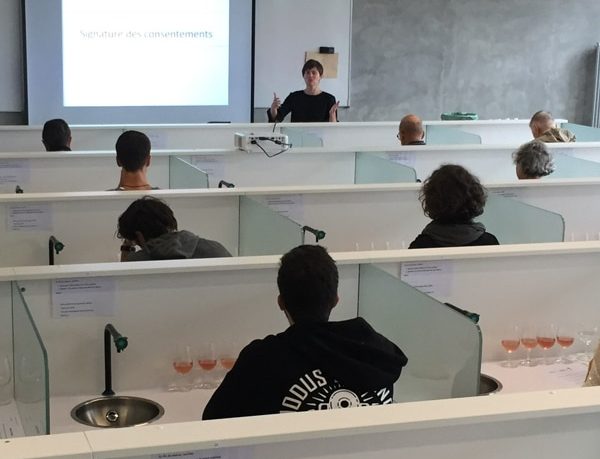
Bachelor’s and Master’s degree students are also highly trained in recognising wines. By the end of their training, they know how to describe and understand a wine, and identify its strengths and weaknesses. They participate in at least two tasting sessions per week, in a tasting room equipped with individual booths and spittoons.

Sensory analysis is the assessment of a wine’s quality. At BSA, on both the Bachelor’s and Master’s programs, it is approached from different angles:

The sensory properties of molecules

Students conduct conventional sensory analyses, like in many other schools. However, students at BSA also learn about links to the latest advances in research: such as molecules and their interactions, a topic explored in recent research by the school’s professor-researchers.

Students are trained in how to identify a wine’s components using test strips. Wine’s aromatic components are composed of hundreds of compounds. Students learn to know and master these compounds. Their noses and mouths become their most important allies for assessing a wine’s composition, guiding their development of a product, or creating a style of wine.

Wine quality analysis

The vinification of red and white wines, blending, ageing and wine fining are studied.

High-quality teaching informed by research and the field

All the professors are recognized researchers. Their work is regularly published in prestigious journals. At BSA, the link between research and teaching is very important.

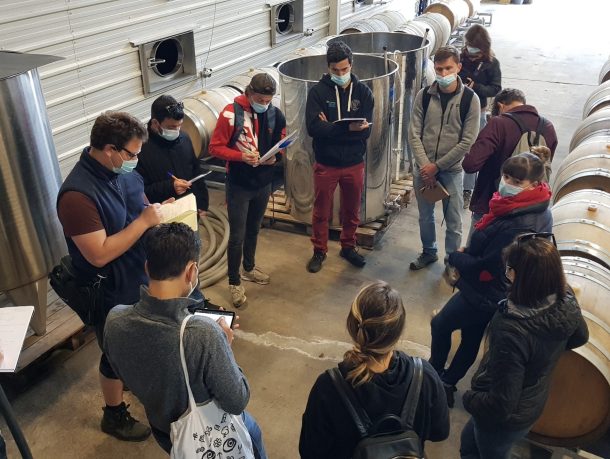
Students go into the field on a regular basis. In fact, the Bachelor’s program starts with two weeks of work at a wine estate during the harvest.

Performing field audits

Master’s students are trained to perform comprehensive audits (technical, economic and accounting) of wine estates. They are immersed in the actual context of the wine estate and the issues it faces. These audits allow them to study the true concerns winegrowers face and push them to find solutions. During their last professional academic project, they carry out an actual consulting assignment.

Teaching on sustainable and organic viticulture

The training addresses the new challenges facing the global wine industry. BSA professors carry out extensive research on sustainable and organic viticulture, and alternative production techniques. The professor-researchers do more than share their knowledge, they produce it!

Personalized coaching by professors

BSA’s International Relations Department can assist students with all their administrative procedures. Optional French language classes are offered every Thursday afternoon. An association of French students is also available to help integrate foreign students. Every Thursday, French and foreign students meet for a drink. BSA is located in the heart of the Bordeaux campus, the venue for numerous parties.

Very high quality education from internationally recognized scientists and people that actually work in the industry.

The two-year Master’s program costs €10,000 per year. This price includes foreign study trips (Western Europe). Since BSA is a public institution, it does not make any profits on the tuition fees for training. It therefore offers excellent value for money, as opposed to American or Australian universities that charge €30,000 per year.
The Bachelor’s program costs €9,000 for the year.

BSA in the heart of Bordeaux wine country: tradition meets environmental renewal

Bordeaux Sciences Agro is located in the heart of the Bordeaux wine region, which is a major advantage. The school shares its connections with the Bordeaux region’s greatest wine chateaux and most prestigious wine appellations. There are many opportunities for students to interact with wine professionals, including outside of the school, with students organising frequent visits to wine estates. They therefore create a professional network that allows them to easily find internships and employment.

While the Bordeaux wine region symbolizes the old world of wine, with its elegance, traditions and grand cru classé, don’t overlook the agro-ecological transition that is already underway, with an increase in organic vineyards in recent years. This makes the Bordeaux region an especially interesting laboratory for experimentation for foreign students.

A multicultural student body

The Bachelor’s and Master’s programs are multicultural. Students come from many different wine-producing countries:

  • North America (USA, Canada)
  • South America (Argentina, Chile, Mexico, Brazil)
  • Australia
  • New Zealand
  • China
  • India
  • Western Europe (Spain, Italy, Portugal, Switzerland, United Kingdom, Denmark, Germany, France)
  • Central Europe (Poland, Balkan countries, Hungary)

Students also come from a variety of different backgrounds. Many are pursuing a career change, which creates an incredibly rich context for the programs.

A wide range of attractive employment opportunities

Upon completing their studies at BSA, foreign students enjoy very rewarding careers. The employment rate after graduation from the Master’s degree is 95%.

There are a wide range of attractive employment opportunities:

  • Wine estate manager
  • Cellar manager
  • Vineyard manager
  • Consultant in viticulture, enology and management
  • Marketing manager
  • Consultant in wine trading and distribution companies, research
  • Developer departments in wine industry, education, etc.
  • Winemaker

Read more on the BSA website:
The global wine market: What are the current trends?

Hiring

The global wine market is impacted by both cyclical and structural factors. The Covid-19 pandemic has led to a growing interest in “second wines” and a boom in web sales. From a structural point of view, the demand for organic wines is soaring.

The impacts of the Covid crisis on global wine consumption
The impacts of global warming on vines worldwide
Exponential growth in organic wine consumption
2020’s boom in online wine sales

The impacts of the Covid crisis on global wine consumption

Increased consumption of low-priced wines

In 2020, Covid led to the closure of bars, restaurants, clubs, and duty-free shops in many countries. As a result, wine consumption has fallen and is now almost exclusively at home.

The growth in exports of bulk wines (+2.5% in value between September 2019 and September 2020) and of Bag-in-Box wines (2 to 10 litre containers) (+4.7% between September 2019 and September 2020) shows that consumption of entry-level wines has increased, while global exports of bottled wines fell sharply (-6% in value for still wines and -14% for sparkling wines).

It should be noted that entry-level wines tend to be produced in Spain (Castilla La Mancha), Chile and certain regions of Italy (Puglia, Sicily).

The top end of the market is doing well

The popularity of fine wines – those traditional wines with a unique taste, and very high prices – is still on the rise because demand is still there. With the health crisis, there is a growing interest in “second wines”, also fine wines but generally less expensive.

“Iconic” or “ultra-premium” wines are produced in France, in Bordeaux, Burgundy and Alsace, in the United States in Napa Valley (California), in Italy, in Tuscany and, in more limited quantities, in Germany, Chile, New Zealand and Australia.

The mid-range market is suffering due to the pandemic

Mid-range wines are the ones that are suffering most from the economic crisis. This heterogeneous market is present in many countries. The New World countries are well known for producing good mid-range wines: South Africa, Australia, New Zealand (Sauvignon Blanc), Argentina (half of the exports are Malbec), California, Chile (a third of the plantings are Cabernet Sauvignon). In France, Languedoc-Roussillon is also positioned in the mid-range.

The most popular red grape varieties worldwide are Merlot, Cabernet Sauvignon, Shiraz and Pinot Noir. For whites, Sauvignon Blanc and Chardonnay are in demand.

The impacts of global warming on vines worldwide

Although global wine-growing surface areas remained stable in 2018, the situation varies from region to region, according to the OIV (International Organisation of Vine and Wine) The area under vines in ‘old Europe’ remains constant, while in many countries the area under vines is shrinking, either by choice, to grow more profitable crops or because of difficult climate conditions, as teacher-researcher Kees Van Leeuwen explains in this article.

Here is how areas under vines have evolved by region.

  • South Africa: -0.2% in area in 2019
  • United States: -1% in area as vines face competition from almond trees and cannabis plantations in some regions
  • Argentina: the area has fallen by 3,600 hectares, mainly because of the drought, although on the other hand the Malbec variety is increasing
  • Australia: area has remained largely stable
  • China: one of the only countries where there has been significant growth in area under vines: +10,000 hectares in recent years (estimates of vine planting in China are not very precise).

Exponential growth in organic wine consumption

In 2019, organic wine consumption reached 802 million bottles worldwide. The forecast was for 976 million bottles to be sold by 2023. In 2019, the leading consumer of organic wines in the world was Germany (151 million bottles of organic wines consumed). In three years’ time, Germany was expected to be overtaken by France, where consumption was expected to grow by 71% between 2018 and 2023. The United States is the third largest consumer of organic wine. Consumers are more concerned about their well-being, and organically produced wines meet these expectations.

2020’s boom in online wine sales

The last major trend to take off with Covid was the sale of alcoholic beverages on the Internet. According to the IWSR, in Australia, Brazil (the leading country for online purchases of alcoholic beverages), China, Germany, Italy, France, Japan, the United Kingdom, the United States and Spain, online sales of alcoholic beverages boomed: +40% in value, reaching $17 billion in 2020. By 2024, sales were expected to reach $40 billion.

Online sales have expanded with the arrival of new producers and the development of marketplaces. The arrival of new consumers has also boosted growth.

With thanks to Alfredo Coelho, teacher at Bordeaux Sciences Agro for providing the figures for this article.

Would you like to study viticulture and wine economics at Bordeaux Sciences Agro in France?

See the degree programme for Master of Science in Vineyard and Winery Management

Cornelis (Kees) van Leeuwen: winegrowers must adapt to climate change 

Faculty and Staff

The effects of climate change on vines are one of the research topics of Cornelis (Kees) van Leeuwen, a teacher-researcher at Bordeaux Sciences Agro. He studies in particular the impact on vines and the ways in which winegrowers are adapting to the changing climate. We asked him a few questions.

Cornelis (Kees) van Leeuwen is a professor of viticulture and a researcher at Bordeaux Sciences Agro and ISVV (Institute of Vine and Wine Sciences). His research focuses on the concept of terroir in winegrowing.

This reputed professor is driven by a passion for understanding the factors (soil, climate) that influence the composition of grapes and wine quality. He also studies the impact of climate change on viticulture and the adaptations that are necessary to produce good-quality wines in a changing environment.

Bordeaux Sciences Agro: what is considered a quality wine?

Cornelis (Kees) van Leeuwen: wine quality is a subjective concept. A quality wine is one that is a pleasure to drink and has well-balanced aromas and flavours. Besides this idea of quality, there is also, more importantly, a notion of typicality with regard to the place where the vine was cultivated, i.e. the terroir (the soil and climate). This latter element produces an extraordinarily diverse range of wines.

I believe that the typicality and originality of the wine are the most important: a great wine must possess a certain originality and ideally be instantly recognisable.

We can draw a parallel with the art world. There are thousands of painters, but when we see a painting by Monet, for example, we can instantly recognise it even if we have never seen it before because it has a particular style.

Wine typicality is determined by a combination of factors:

  • The soil, which is unchanging
  • The climate conditions which vary from one year to another but have defining characteristics in a given location
  • The human factor determined by the winegrower’s choices (grape varieties planted, farming techniques, soil treatment etc.)

My research revolves around this question of quality, originality and typicality. Behind all that, there is the idea of promoting it. You would hope to sell a good wine for more money. There is an economic reality. It is a way of creating added value.

How do you make good wine?

You can make good wine when you understand how the climate and soil work to give the grape a specific composition in a particular location. Some of the winegrower’s choices (grape variety, farming techniques etc.) also affect the result. Decisions are made according to the soil and the local climate in order to produce a high-quality, typical wine.

How does climate change influence vines?

It is acknowledged within the community of researchers that the climate influences the quality and typical character of wine. The vintage is irrefutable proof of this. Climate conditions vary each year. You obtain different quality vintages depending on the weather in a given year.

Climate change also affects the composition of grapes and the wine. If the grape composition is different, the taste of the wine changes.

Climate change also modifies the resources used. In order to continue producing good wine, production processes have to be adapted by using different grape varieties, techniques etc. Winegrowers have to make different choices in terms of plant material and cultivation techniques.

Climate change does not prevent the production of great wine, but it will certainly have a different taste. Winegrowers must adapt to this change. My research aims to understand the effect of global warming on grapes and the taste of wine. We can then plan for the future and provide for adaptations to be put in place to continue making the best wine possible.

What are winegrowers doing to fight the effects of climate change in France and across the world?

Winegrowers have always adapted to climate conditions. The decision of when to harvest depends on the weather during that season. In hot years, they harvest earlier.

They can also cultivate the vines differently. Leaf stripping was once a commonly used technique. Today it is less so to prevent the grapes from getting too hot in the sun.

We are also seeing changes in the grape varieties used. Some grape varieties, like Sauvignon Blanc and Merlot, are not well adapted to high temperatures. Cabernet Franc and Cabernet-Sauvignon are better adapted to global warming. Petit Verdot also grows well in hot climates. It remains in the minority but its surface area has doubled in the Bordeaux region. We must therefore rethink the proportions of grape varieties in Bordeaux in the context of warmer temperatures.

New winemaking regions are appearing with global warming. Although it is early days still, we are seeing projects to plant vineyards emerging in Britany and Normandy.

Across the Channel, thousands of hectares of vines have been planted in recent years. England is becoming a serious wine producer as a direct consequence of global warming.

In the Mediterranean region, in Cyprus for example, vineyards are being planted at higher altitudes – at 1,400m – in search of cooler temperatures. In Argentina, vines are also moving to greater altitudes in the Andes.

Water resources are also becoming a challenge, with an increase in rainfall in northern Europe and a decrease in the Mediterranean area. Although the lack of water does not affect quality, it greatly reduces yields. Wine is better in dry years. You can grow vines with or without irrigation. Since it is necessary to preserve water resources, I am notably studying how to make wine using as little water as possible.

See the researcher’s profile on the following website
See also: « The new challenges facing winegrowing companies »

BSA students conduct management audits of wineries

Students & Trainees

Students in the Master of Science in Vineyard & Winery Management program are required to conduct a complete technical, financial and marketing audit of a wine estate. This challenging exercise trains students to become true vineyard and winery managers. The audit allows them to understand the management of a winery in all its complexity. BSA is the only school in the world to offer this course.

The first-year Master’s students carry out a technical audit
The second-year Master’s students carry out a complete audit: technical, accounting, financial and marketing

Students following the Master of Science in Vineyard & Winery Management degree program face the real challenges of managing a foreign winery, by conducting a complete audit – technical, accounting, financial and marketing – which they are required to do in their second year.

This difficult and complex exercise is a flagship feature of the BSA (Bordeaux Sciences Agro) course. It is the only school in the world to offer this in its teaching.

The students, working in groups of 4 or 5, are expected to act as real external consultants and present their work and advice at the end of the audit to the owners and managers of the vineyard.

The first-year Master’s students carry out a technical audit

To prepare them for this complete audit, in their first year they carry out a technical audit for a French wine château, with BSA teachers Laura Farris and Greg Gambetta. They collect data by conducting field surveys and interviewing the owners. In particular, they must observe the vigor of the vines, the geomorphology of the vineyard (slope and exposure of the different plots), etc.

They evaluate the vineyard, as well as the technical and human means of production, and must find improvements to better adapt to the owner’s strategy.

They also taste the product range according to different criteria and compare it with that of the competition to position it qualitatively and quantitatively.

They then participate in coaching sessions during which they can ask their teachers for guidance. They brainstorm and explore different ways to improve.

Statistics on the data collected in the vineyards and the wines tasted are calculated to analyze whether there is significant variance between different elements. For example, they can compare the mortality of vines in one plot with those in another.

Each group presents its work orally to the teachers and the owners of the estate.

The second-year Master’s students carry out a complete audit: technical, accounting, financial and marketing

In the second year of the Master’s program, students travel abroad (in non-Covid times) to audit a winery in a comprehensive manner: technical, accounting, financial and commercial.

BSA finds the estate, and organizes and finances the trip, which lasts from 7 to 10 days. The winery under study generally has a minimum of 20 hectares of vineyards and focuses on exports. It can be a family-run organization, a member of a cooperative winery, or a multinational, located in another country.

The 3-month entrepreneurial project (from January to the beginning of April) is carried out in teams, in a confidential setting. The visit to the vineyard lasts 2 days. Other estates in the region are visited to understand the regional particularities and to provide a benchmark. Students really appreciate this immersion. They must understand the challenges facing the vineyards and meet the expectations of the managers. The aim of the exercise is to train future winery managers.

The complete audit consists of three phases:

  • Diagnostic
  • Analysis
  • Proposals

First phase: diagnostic

Students must conduct a number of benchmarks on:

  • Accounting and financial analysis
  • Sensory analysis of the wines of direct competitors
  • Viticultural analysis (soil analysis, disease issues, climate-related issues, vegetative state, irrigation, etc.)
  • Oenological analysis (degree of innovation, wine-making and ageing practices, etc.)

Wineries share their accounting and financial documents over a period of at least 3 years, some even 8 years, as well as their technical and commercial data, buyer behavior, etc.

The students build the data, and sometimes even set up cost accounting.

They conduct various surveys among consumers, either online or through focus groups, for example on their perception of wine labels, their opinion on wine tourism, the price they are willing to pay for organic certification, the market placement of wines according to distribution channels, etc.

They also have the opportunity to conduct a study on the soils, the climate, the allocation of working periods in the vineyard and the cellar, the managerial organization of the winery, etc.

Second phase: analysis

A full financial analysis is carried out, looking at the following:

  • Labor costs
  • Production costs (grape harvesting machines, sprayers, bottling, labeling, tractors)
  • Costs of inputs, purchases of dry materials (bottles, corks, labels…), (re)planting
  • Marketing costs
  • Selling price
  • Marketing effort

They analyze the overall profitability of the operation, the debt ratio, the relationship with customers and suppliers, the profitability of marketing channels and products, etc. They can also perform an analysis of the website and the management of social networks.

The audit is accompanied by coaching sessions with BSA teachers, in particular Jean-Christophe Barbe or Alfredo Coelho on the financial and management part, and with other professionals involved in the management of wine companies (wine merchants, winery managers, export managers, etc.). In-depth interviews are held with the owners and/or managers of the winery studied.

Third phase: proposals

This phase is risky and delicate: it consists in making realistic management choices, justifying them and making suggestions to the owners and managers of the winery.

The second-year Master’s students must find solutions to the challenges exposed during the diagnostic phase and formulate scenarios, for example:

  • An inheritance
  • An appellation or geographical indication
  • Conversion to organic (loss of volume, additional costs, at what price should I sell my organic wines to be profitable?)
  • Reorganization of the market placement of a wine range
  • Insufficient profitability or too much debt.

Students sometimes propose innovations, for example producing sparkling wines, or planting new grape varieties that are resistant to cryptogamic diseases.

They must quantify the costs generated by their proposal and create a business plan to calculate the return on investment in the medium or long term (3, 5 or 10 years). For example: if the proposed solution is to plant a new grape variety, use fertilizer, buy more expensive barrels, redesign the packaging, etc., they must calculate the profitability of this solution and consider all consequences.

Then, the owners or managers can implement these proposals for improvement among the different ideas brought forward by the students, thus benefiting from new insights.

The audit is the subject of an oral presentation of 1 hour and 15 minutes (30 minutes of presentation and 45 minutes of questions and answers) in front of BSA teachers and the owners and managers of the winery. The report is then evaluated and a group grade is given.

See the Master of Science in Vineyard & Winery Management degree program

FARRIS Laura

FARRIS Laura

Ingénieur d'étude

Enology

Biography

Research unit and labs

After graduating from the University of Milan as an enologist, she has acquired experience in winemaking in Italy, France, Argentina, Australia and New Zealand.

She is now doing sensory analysis and pedagogical support, as well as teaching wine tasting and coaching for audits at Bordeaux Sciences Agro. She is also providing some support to the MBS in Vineyard and Winery Managment pedagogical coordination.

Professional opportunities following the Bachelor in Viticulture and Enology and the Master of Science in Vineyard and Winery Management degree programs 

Hiring

What becomes of the graduates of the Bachelor’s degree in Viticulture and Enology and the international Master’s degree delivered by BSA (Bordeaux Sciences)? Their careers are rich and varied. Most foreign graduates return to work in their country of origin. Others remain in France after their end-of-studies internship. Here are some examples of the careers of former students, with key figures.

What are the professional opportunities following the Bachelor of Viticulture and Enology degree program?
What are the professional opportunities following the Master of Science in Vineyard and Winery Management degree program?

What do graduates of the two international courses at BSA (Bordeaux Sciences Agro) go on to do: the Bachelor’s degree in Viticulture and Enology and the Master of Science in Vineyard and Winery Management?

The vast majority go on to work after graduation. A minority continue their studies, going on to either a master’s degree for bachelor’s students, or doctoral research (PhD) for master’s students, notably at or at Cornell university.

The opportunities are very varied, from vineyard manager to winemaker in the family business, or even positions in exports or marketing.

What are the professional opportunities following the Bachelor of Viticulture and Enology degree program?

The purpose of the bachelor’s degree is professional. Therefore, most graduates return to their country of origin to work in the vineyards or in the cellar of a winery.

Their first job is most often as an assistant in a winery. The objective is to acquire first-hand professional experience that will act as a springboard to a position of responsibility.

Salaries vary greatly depending on the country’s standard of living and the level of experience of graduates. Some are just starting to work while others already have previous professional experience that they can build on. The average gross salary in Europe is €25,000 per year. In the United States, one alumni earns €43,000 per year.

Some go on to take over the family business, like José Jesús Mata Zagoya who manages viticulture and enology for the winery owned by his family in Delicias, Chihuahua, Mexico.

Chinese graduates tend to work in the wine business in China or finish their studies in a Chinese university.

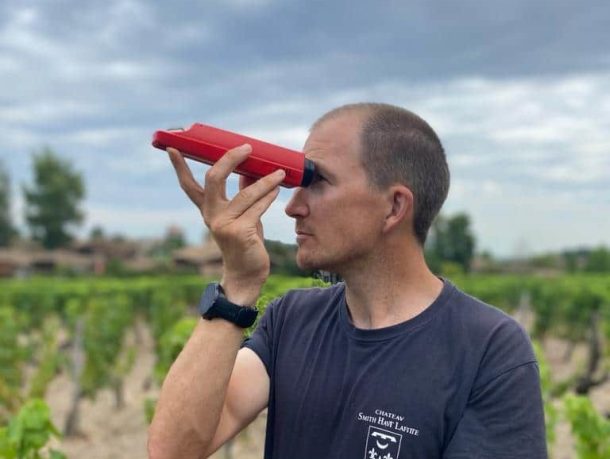
Most were recruited through personal connections or as a result of their end-of-studies internship, like Scott Hurell The former New Zealand student worked for two years at Château Smith Haut-Lafitte in Pessac-Léognan, Bordeaux, France, where he had completed his internship. He participated in two vinifications in the cellar. He then returned to New Zealand, where he was an assistant cellar master at a small winery.

The potential career paths are varied. Hélias Bentejac, 23, chose to go on to a Master of Science in Vineyard and Winery Management at BSA.

Professional opportunities following the Master of Science in Vineyard and Winery Management degree program.

55% of graduates from the Master’s program go on to work in wine production, viticulture or enology, even if they did not have a technical background to begin with. In general, they start as assistant vineyard managers, assistant oenologists, etc., and after a few years become production managers or oenologists. Others work in oenological laboratories.

45% get a job in sales, marketing, exports or take over the family wine business. Some set up their own wineries.

Young graduates of the master’s program usually go back to work in their country of origin, but some stay in France and sometimes settle down there, as is the case with Tommaso Nicolato, 29, Italian, who did his final internship at Château Palmer where he was then hired. He worked there as head of the experimentation and development laboratory for three and a half years. Since 2019, he has been working at the Excel laboratory in Bordeaux, as manager of the Enology Department.

Other graduates go abroad and then come back to France because they really enjoyed French life, like Bruno de Faria Baricelli, 27, from Brazil, who went to make wine for a season in Chile and then in California in 2016. He then returned to France and became a consultant oenologist at Natoli et Associés.

First jobs can sometimes be insecure, but all manage to get a permanent position after a year and a half. Lilia Melissa Perez Jimenez, an American-Mexican, age 33, for example, has found a position as Operations Manager on Long Island in New York, USA.

Salaries vary greatly. In France, young graduates with a master’s degree can ask for €1,800 to €2,200 gross per month in their first working year. In the United States or Canada, they earn between 50,000 and 100,000 US dollars per year.

The alumni find jobs most often in medium or large wineries. Large companies like LVMH or AdVini in France recruit from BSA. For example, a former student now works as an export manager at Emiliana Organic Vineyards, which has received numerous top awards for organic wine production worldwide.

Career paths of BSA graduates are varied and, in all cases, rich in experience.

See the Master of Science in Vineyard & Winery management degree program

See the Bachelor’s degree in Viticulture and Enology program

Find out more

A very appealing student life in Bordeaux

GIFFARD Brice

GIFFARD Brice

Associate Professor

Vineyard Health and Agro-Ecology

Keywords

Biodiversity, ecosystem services, arthropods, landscape, farming practices

Biography

I am a lecturer in the Department of Agroecology and associated researcher with the SAVE unit “Santé et Agroécologie du Vignoble : Health and Agroecology of vineyards” (INRAE and Bordeaux Sciences Agro).
During my PhD (UMR BIOGECO, Bordeaux, 2011) I studied how insectivorous birds and neighbouring plants influence herbivorous insects feeding on oak seedlings. My following post-doctoral positions (INRA Bordeaux, INRA Toulouse) focused on insects associated with plantation forests (longhorned beetle vector of pine nematode) and agricultural landscapes (carabids as pest control providers).
Since my arrival at Bordeaux Sciences Agro in 2014, I am involved in different European and national projects concerning services providers, from vertebrates to mesofauna, and the positive effects of this biodiversity for vineyards such as organic matter decomposition or pest control. My teaching activities focus on relationships between agricultural practices, biodiversity and ecosystem services they can provide for agriculture.

COELHO Alfredo

COELHO Alfredo

Associate Professor

Biography

MARTINS-MARQUES Guilherme

MARTINS-MARQUES Guilherme

Research Engineer

Enology

Subjects

Microbial ecology, epiphytic communities associated with wine grapes (bacteria, yeast and filamentous fungi), diversity and population structure. Dynamics and evolution of microbial populations interacting with grapevines.

Keywords

Grape berry epiphytic communities, grapevine, biotic and abiotic effects over microbial population.

Biography

Guilherme Martins holds a Ph.D. from the University of Bordeaux (France) in microbiology and biotechnology, and a degree in enology from the University of Vila Real (Portugal).

His current research topic focuses on the microbial community associated with grape berries: how the abiotic and biotic factors influence this community and its importance on grape composition and quality.

Guilherme is also a winemaker with experience that covers countries like Portugal, France and the US. He actively participates in promoting and developing innovations in winemaking research useful for both students and the community at large.

Research unit and labs

Unité de Recherche Œnologie – EA 4577 – USC 1366 INRA

Institut des Sciences de la Vigne et du Vin (ISVV)

GAMBETTA Gregory

GAMBETTA Gregory

Professor of Viticulture

Vine Ecophysiology and Functional Genomics

Biography

Greg is a professor of viticulture working at the agricultural graduate school (Bordeaux Sciences Agro) and the Institut des Sciences de la Vigne et du Vin (ISVV) in Bordeaux, France. He received his PhD from UC Davis while working in the department of Viticulture and Enology and has worked for over 15 years as an industrial and academic researcher in the U.S., Mexico, Italy, and France. His research on grapevine adaptation to drought and the impact of environment on winegrape ripening is internationally recognized. Through his work Greg has been recognized as a Fulbright scholar, National Science Foundation award recipient, and California Council on Science and Technology fellow.

My interests are focused on three primary areas:

  1. rootstock effects on scion physiology especially with regard to root water uptake and adaptation to stress (drought, salt, etc.);
  2. vine hydraulics and water relations at the cell, organ, and whole plant levels;
  3. the control of ripening processes, specifically veraison, and how environment and stress impact berry development and berry composition.