
Thématique: Vine & wine
What better place than Bordeaux, the world’s wine capital, to learn all about vines and wine? Our graduate school specializes in vine science, enology and wine business management. Learn from the best, from vine cultivation to estate management, or become an international enologist or sommelier!

Subjects
Ecophysiology, terroir, vine water status, vine nitrogen status, phenology modeling, effect of climate change in viticulture.Keywords
Vine, terroir, water status, nitrogen status, aroma compounds, phenology.Biography
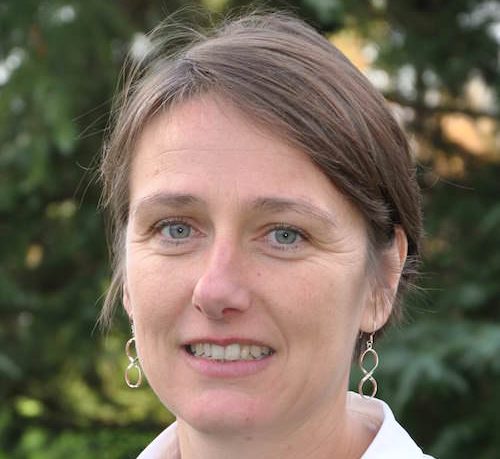
Cornelis (Kees) van Leeuwen is professor of viticulture at Bordeaux Sciences Agro, and Bordeaux University’s Institut des Sciences de la Vigne et du Vin (ISVV). Kees van Leeuwen conducts research on the concept of terroir in viticulture. His works are centred on environmental constraint in the expresssion of vine-growing terroir. This constraint is most often a limiting of water supply or a limiting of nitrogen nutrition in the vines. Kees van Leeuwen has taken part in the creation and evaluation of several indicators of vine water and nitrogen status in vines. Kees van Leeuwen has also worked on the climate’s effect on the expression of vine-growing terroir. The vine’s response is evaluated through the precocity of its vegetation, its growth and development, and its grapes’ constituents at ripeness. Particular attention is paid to the grapes’ aromatic potential in relation to environmental factors. He participated in the creation of the Grapevine Flowering Veraison model (GFV model). His research focusses particularly on the effects of climate change in viticulture and how growers can adapt to a changing environment.
Other activities
Kees Van Leeuwen was initially trained as an enologist but he did a PhD on a terroir related subject: the influence of soil and climate on quality potential in the Saint-Émilion winegrowing area. He has been a consultant for Château Cheval Blanc in Saint-Émilion for 25 years. He has carried out or taken part in numerous studies to map the different soils of wine estates and appellations. Kees van Leeuwen is the founder and editor of the international peer reviewed open access journal ŒNO One. He also writes on a regular basis for the Dutch magazine Perswijn.
Research unit and labs
Institut des sciences de la Vigne et du Vin (ISVV)
École doctorale de rattachement : Sciences de la Vie et de la Santé
Subjects
Arômes des vins (des précurseurs inodores à la perception des composés volatils), maîtrise de la combinaison du dioxyde de soufreKeywords
Chimie du vin, arômes, analyse sensorielle, interactions perceptives, dioxyde soufre.Biography
Jean-Christophe Barbe got his PhD at Faculty of Enology, Bordeaux University, in 2000 where he worked on SO2 binding phenomena in sweet wines from botrytized grapes.
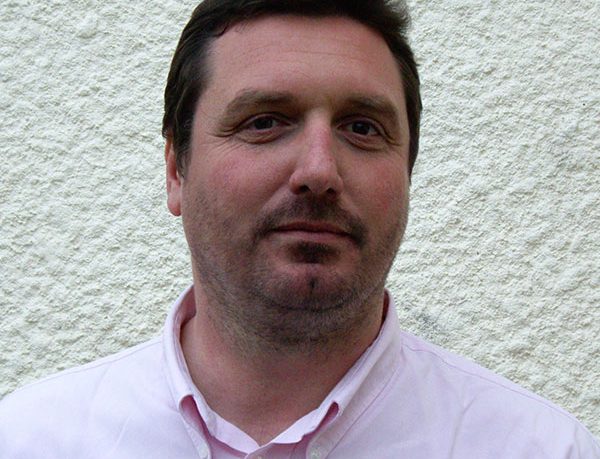
He joined Bordeaux Sciences Agro in 2001. His speciality is Wine and Grape chemistry, Sensory Analysis, Winemaking and Company Auditing. He manage, at the Institut des Sciences de la Vigne et du Vin de Bordeaux Aquitaine (ISVV), research mainly focused on wine aroma with 38 Publications in international journals, 35 Communications in international congresses and 2 patents. Jean-Christophe is also a winemaker with an experience of more than 20 vintages.
Research unit and labs
Unité de Recherche œnologie, co-animateur de l’axe Qualité et Identité du Vin
Institut des sciences de la Vigne et du Vin
Ecole doctorale de rattachement : Sciences de la Vie et de la Santé
Subjects
Rootstock, water deficit tolerance, rootstock-scion interactions, limestone chlorosis tolerance, genetic architecture, plasticity of responses to environmental variationsBiography
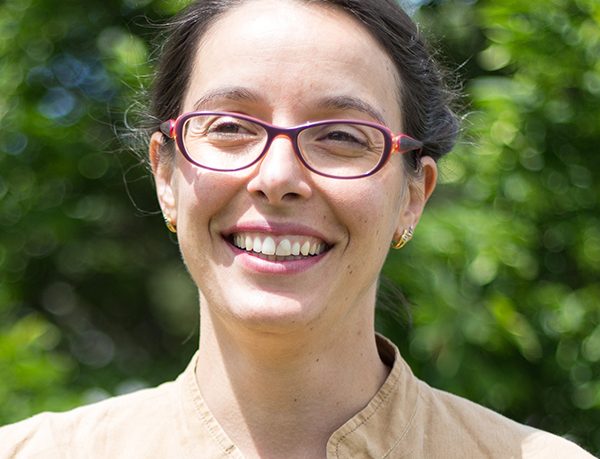
Elisa Marguerit is an associate professor in Viticulture at Bordeaux Sciences Agro. Her lectures deal with viticulture practices such as fertilization and vigor management, experimental design and quantitative genetics. Her research activities aim to study the rootstock responses to water deficit and to identify the genetic architecture for some adaptative traits. She got her PhD in 2010, dealing with the genetic architecture of water deficit responses induced by grapevine rootstock. One particular genetic region was detected as involved in the water extraction capacity.
She coordinates an original experimental vineyard: the GreffAdapt plot, created to get and update the agronomic characteristics of 55 rootstocks. These rootstocks were grafted with 5 scions. Overall, Greffadapt is a very unique experimental facility to speed up the selection of rootstocks and to analyze the relationship between confered vigour and drought tolerance, two major selection criteria for rootstocks. The aim is to characterize existing rootstocks already used in foreign countries or available in germplasm collections, to allow a faster enlargement of the rootstock range available for vinegrowers. This work is complementary to the selection of new-bred genotypes. In the frame of this second approach, she coordinates crosses to get more drought tolerant rootstocks andshe studies, in particular, the Vitis berlandieri genetic background.
Other activities
Elisa Marguerit has evaluated the vegetative development, yield component and the maturity related traits of 88 clones of Petit Verdot in a repository at Château Luchey Halde.
Research unit and labs
Institut des sciences de la Vigne et du Vin (ISVV)
Ecole doctorale de rattachement : Sciences de la Vie et de la Santé

Subjects
Microbial ecology from grapes to wine at the community (yeast and bacteria) and species (genetic and phenotypic diversity, population structure) scale.Keywords
Yeast, wines, fermentations, microbial ecology, diversity, population structure.Biography
After graduating in Enology at the Bordeaux faculty of Enology, she got her PhD in “Ampélologie – Enologie” at Bordeaux University. She was in charge of research in biotechnology at Laffort Oenology company, Bordeaux France during 6 years. Now she is professor of enology and she is at the head of the Science Department of Bordeaux Sciences Agro. Isabelle Masneuf-Pomarede conducts research on wine microbiology, especially of wine yeasts including fermentative and spoilage yeast.
Research unit and labs
Institut des sciences de la Vigne et du Vin
Ecole doctorale de rattachement : Sciences de la Vie et de la Santé