
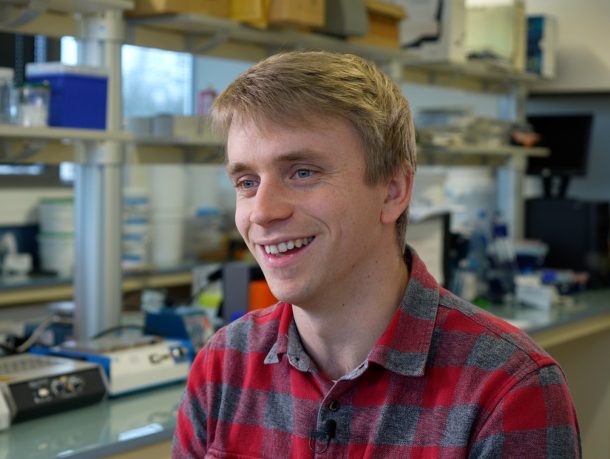
Discover the exclusive interview with Marc Plantevin, former student of Bordeaux Sciences Agro, now a doctoral candidate conducting innovative research on climate change adaptation and the preservation of the typicality of Bordeaux vineyards.
My name is Marc, I’m 30 years old and I’m a PhD student in Bordeaux working in viticulture and enology. I don’t have a very strong scientific background. Indeed I first started in Hospitality, so I did three years of study in Hospitality, then I’ve been a sommelier, first in London then in Paris in some 3 Michelin’star restaurants. It has been very helpful for the rest of my career to be a sommelier. It’s only during COVID time that I wanted to go back to school and to learn about wine science. So I had the opportunity to be enrolled in the Master of Science Vineyard and Winery Management at Bordeaux Sciences Agro. So for two years I’ve studied about wine science, winemaking, enology and viticulture, and it has been very helpful for my PhD.
What is the scientific aim to your PhD?
My PhD is a bit particular in the way that I’m working with a private company as well with the public company which is Inrae science center. So I’m in both sides: the private and the public. My question is about climate change and wine typicity in Bordeaux. Indeed climate change is changing the wine typicity of Bordeaux and we’re trying to find new varieties in order to adapt to this global warming, also to keep and maintain this wine typicity, for the Bordeaux wineyards.
The main preliminary results?
The main innovative step we have in this PhD is this: normally, when you work on new plant material or new varieties, you only work on the science side of it, which is “Is it tolerant to climate change, drug tolerance etc.” The approach we have is first we try to answer this question about tolerance to climate change, but also this question: “Does it make sens to plant this variety in Bordeaux, in order to keep this wine typicity?”. This PhD is really either the pure science but also some kind of empirism from the wine world. This idea of increasing the varietal diversity in Bordeaux is not brand new. Indeed 100 years ago, we had a lot of of different varieties in Bordeaux, more than 50 different varieties. While today we have only six. So I’m working on this topic with this PhD but other winegrowers as well have planted on their own some varieties, older varieties of Bordeaux and try to see if it’s adapted to the new climatic conditions.
What is the originality of this approach?
The interest of this research is that it’s kind of very practical research. Because all the varieties that we are looking at, we want them to be planted in a near future in Bordeaux and we want this increase of diversity to happen in the next few years. We do have some first results: we mainly have five different varieties which are very interesting in terms of wine typicity, to protect this wine typicity. They mainly come from Bordeaux, they were planted 100 years ago. Some of them are coming also from Southwest of France, which is kind of close to Bordeaux. So those variety are protecting the wine typicity. However we still investigate if they are adapted to a warmer conditions, as we expect, in the near future. The main thing about this PhD is not about changing the grape variety in Bordeaux – it’s not what we want to do – it is only to increase the diversity of Bordeaux. So wingrowers can have different tools to adapt to climate change. It’s very about the history of Bordeaux, we always have a lot of different grape varieties in Bordeaux and we just want to reach this diversity.
What benefits can be expected after your thesis’ publication?
As every PhD fellow, when you end the PHD, you always have some academic results which are published in scientific journals. So we’re working on that, on the different topics on which I’m studying. But my kind of dream is more that the INAO, which is the governmental company which makes the rules of Bordeaux will be interested in those results, in order to kind of breaking the border and making things change for the winegrowers, for them to have many more tools to adapt to climate change.
An advice for those wishing to change career direction?
Whatever is your professional background, doing this master is very interesting. Because whatever you’ve done before, it always will be helpful for this master. This master is great for many reasons. First one, it’s really a melting pot of many people from many backgrounds, from all over the world, and it’s very rich in term of intellectualism. Then also this master is very interesting because you have great teachers, who are teaching a lot on wine science, on pure wine science, but you also have some pure application of winemaking like the internships, the audits… So you know how to make wine and you also understand how the wine is happening.
Do you recommend pursuing in PhD?
PhD, first of all, is a job in itself, righ? So for three years, you’re studying one topic, paid for that you don’t have lecture, it’s really a pure job. So it teaches you many things all about your topic, you’re becoming an expert obviously. But also about criticism: in terms of science, in terms of results… you have the the tools to analyze what people say to you. Then after PhD, you have let’s say two main pathways for a professional career: first one, being very academic, pure research, but also some private research as a “research and development” director in different wine estates, which is what I aim to do after this PhD.
A word to those who are temped?
Yes I think you should definitely do this master! It’s been great. Thank you.
More testimonies

“The program meets my personal and academic goals ”

“I think it’s one of the best programs ”
Abraham - Master of Science Vineyard and Vinery Management student